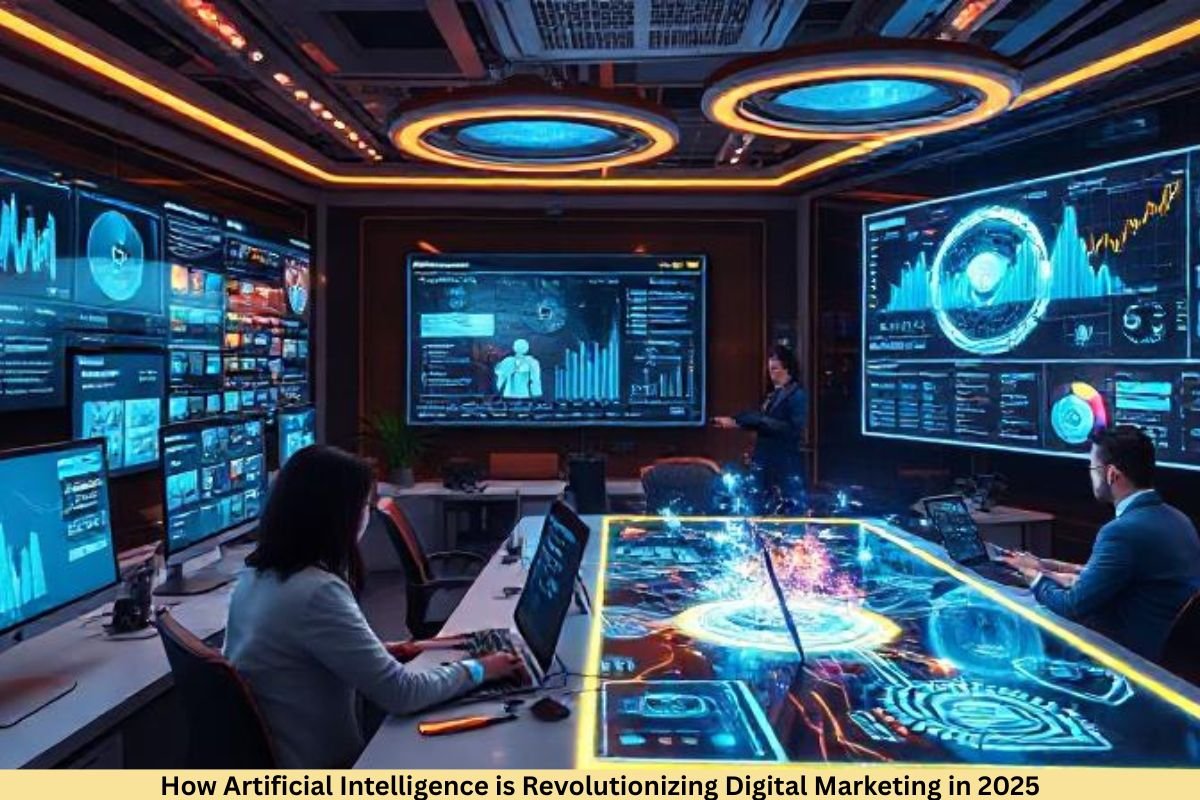
Artificial Intelligence (AI) is no longer science fiction – it is reality shaping industries worldwide, and digital marketing is no exception. From individual shopping experiences to future analytics, AI is revolutionizing brands in the way of connect with their customers. Businesses that fail to embrace AI risk, already taking advantage of their immense ability.
What is Artificial Intelligence in Digital Marketing?
In simple terms, machine learning algorithms to customize artificial intelligence marketing strategies in digital marketing refer to using natural language processing and data-driven automation. Unlike traditional marketing, which depends on manual analysis and intuition, the AI processes large-scale data in real time, which helps in making faster, smarter, and more accurate decisions.
Types of AI applications in marketing
Machine Learning (ML): The trend helps in prediction and customer behavior analysis.
Natural Language Processing (NLP): Power Chatbots and Content Creation.
Computer Vision: Visual recognition and image-based marketing.
Predictive Analytics: Forecast of results for optimizing campaigns.
Digital marketing development with AI
Traditional marketing depends much more on the instinct of the intestine and limited data sets. Over time, with the rise of digital tools, Vipanak gained access to analytics, but explaining the huge dataset remained a challenge. AI has never seen this difference on a scale by starting this difference automation, future modeling, and personalization.
Milestones such as AI-Inumed Advertising Largeting, Voice Search Optimization, and Chatbot Development have completely shaped digital marketing in the last decade.
AI-Investigated Customer Insight
One of the most powerful applications of AI is the ability to understand themselves better than understanding themselves.
Data Collection: AI tools, browsing history, and purchase patterns from social media.
Prediction of behavior: AI can predict when a customer is likely to purchase, brainstorm, or upgrade services.
Think of AI as an individual detective that consistently study your customers to give clues about their next step.
Privatization on the scale
Customers no longer want generic advertising – they hope they suit experiences. AI makes it possible.
Hyper-personalized recommendations: Netflix and Amazon are prominent examples of AI-run personalization.
Dynamic Content Creation: AI can generate separate website versions for different users based on their preferences.
AI in Material Marketing
Making content manually for SEO is time-consuming. AI speeds up things.
Automatic Materials generation: Jasper and Copy.Ai can generate blogs, advertising, and product details in seconds.
AI for SEO: Clearscope or platforms like Surfer SEO optimize materials for better search rankings.
Chatbot and condensed marketing
AI Chatbots have become front-line representatives for many businesses.
24/7 Support: Chatbots never sleep, provide immediate answers.
Real-time Marketing: Bots attach customers to natural interactions, improving the satisfaction of the user.
AI in social media marketing
Managing many platforms can be heavy, but it simplifies the AI process.
Bhavna Analysis: AI detects the customer emotions through comments and reviews.
Customized Posting: AI Equipment posts the post schedule at the right time for maximum engagement.
AI-Powered Email Marketing
Email remains a powerful tool, and AI makes it even better.
Smart Partition: AI divides the audience based on real-time behaviors.
Personal Email: For product suggestions from subject lines, AI ensures that emails feel tailored.
In Voice Search and AI Marketing
With smart assistants such as Alexa and Siri, the voice search is booming.
Customization for Voice SEO: Verbers must be suited to conversion questions.
Hands-free shopping: Voice-Inebled Shopping is becoming an ideal.
Programmatic Advertisement with AI
AI automatically buys advertisements with a bid in real-time.
Present Targeting: Advertisements reach the right audience at the right time.
Cost Efficiency: Ends the estimate and reduces the wasted advertising expenses.
Visual recognition in marketing
AI can “see” and interpret images just like humans.
Image recognition: Social media platform posts use AI to identify logos and products.
Visual Search: Pinterest Lens allows users to search for products using images.